How trust in the numbers is helping AFC Wimbledon develop the next generation of female coaches
Trusted financial data is helping AFC Wimbledon expand opportunities for female coaches through its LeaD ON pathway. Here’s how.
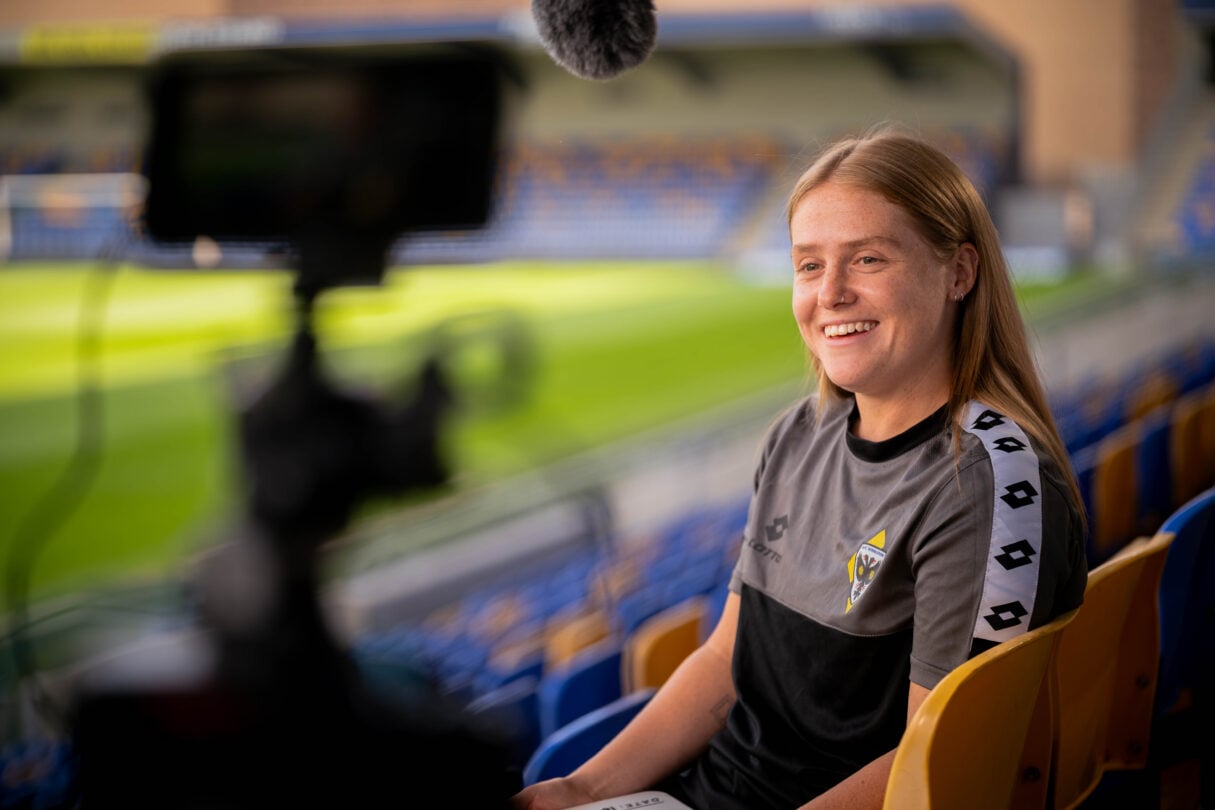

AFC Wimbledon isn’t owned by an investor. It’s owned by the fans. It’s how the club is run, decision by decision, without a backstop to call when things get tight.
That’s why, at Wimbledon, every pound must work harder: for the football club, for its charity arm AFC Wimbledon Foundation, and for the women’s team they’re growing for the long term.
Nowhere is that clearer than in LeaD ON, the Foundation’s female coaching pathway. It’s a programme built on funded qualifications, mentoring, and belief. LeaD ON works because the finances behind it are trusted and built to grow.
That’s what we discuss in this article, as follows:
Creating opportunities from the pitch
Watch the interview above to hear from the Senior Officer for Women & Girls, CEO of the Foundation, and key sponsor for LeaD ON to discover how Sage has given them the clarity they need to invest and grow with confidence, on and off the pitch.
When Senior Officer for Women & Girls, Kate Wells, talks about LeaD ON, she rarely starts with qualifications or coaching badges. She talks about confidence.
For her, LeaD ON is about women taking a first step into a world they never imagined they could be part of. It’s about community, support networks, and seeing people discover what they’re capable of.
LeaD ON was created to help more women find a route into football coaching. Funded locally by philanthropist and sports broadcaster Mary Fitzhenry, the programme was designed to address a gap in female role models and create a sustainable pathway for women and girls interested in the game.
“It takes so much for these women just to take that leap into coaching,” says Kate. “It’s about that community, and it’s about that shared experience.”
Every stage is delivered by women, for women. From leadership qualifications in schools to a mentored coaching programme and fully funded UEFA C Licence access, the pathway equips girls and women with the skills, confidence, and qualifications to become grassroots coaches.
Approximately 30 coaches have progressed through LeaD ON so far. At a recent AFC Wimbledon event, around half of the female coaches present were programme alumni, a significant shift from when Kate first joined the organisation and there was only one female coach involved.
But for Kate, the numbers only tell part of the story. One participant joined the programme after Long Covid forced her to leave work. She had never coached before but decided to give it a try. Within a year, she had progressed through the pathway, secured coaching opportunities, and eventually moved into a full-time role within another football foundation.
“The biggest and most rewarding takeaway,” says Kate, “is actually seeing them grow not just as coaches, but more importantly, grow as people.”
Programmes that are built to last
Stories like this are powerful, but they don’t happen by accident. For organisations like AFC Wimbledon Foundation, creating long-term opportunities means balancing ambition with financial sustainability.
Over the past seven years, the Foundation has grown significantly, increasing turnover from around £300,000 to more than £1 million while expanding the number of programmes it delivers across the local community.
At the same time, AFC Wimbledon itself continues to operate differently from many clubs in professional football.
The club runs one of the division’s smaller playing budgets. Without an individual owner providing financial backing, careful planning and informed decision-making are essential.
“We have to forecast ahead and make sure we’re spending it well,” says Club Finance Director Laurie Hill.
For the Foundation, that same discipline helps ensure programmes like LeaD ON can continue to grow.
“When we’re applying for grant funding or planning future projects, we need complete confidence in our numbers,” explains Foundation CEO Phil Hastings. “The decisions we’re making today affect what we’re able to deliver for our community tomorrow.”
Trusting the numbers to make better decisions
As the Foundation expanded, having a clear understanding of financial performance became increasingly important.
For Finance Officer John Taylor, the value comes down to trust: “As far as the finances of the Foundation go, Sage is the holy grail. What our accounting system says is the truth.”
That confidence allows teams across the organisation to make decisions using the same data, whether they’re managing budgets, planning projects, reporting to funders, or identifying opportunities for growth.
Phil has worked to extend that visibility beyond the finance team.
“It’s not just on the finance team to understand the business side of things,” he says. “It has to be the wider team, understanding their budgets, understanding how to make sure their expenditure is in line.”
Rather than waiting on reports or relying on assumptions, department leaders can see where they stand and make decisions with confidence. For a growing organisation, that visibility creates something valuable: time.
More time for what matters
Sophia Axelsson, General Manager of AFC Wimbledon Women, understands the impact first-hand.
As the only full-time member of staff supporting the women’s team, her time is precious. Previously, preparing reports for the board could consume an entire day each month. Today, working closely with the finance team and using shared financial information through Sage means those reports can be produced almost instantly.
“Now that I’m working much more closely with the finance team, what used to take me a full day a month is done instantly,” she says.
That’s time that can be reinvested elsewhere: supporting players, developing staff, and helping grow a women’s team with roots dating back to 1974.
It’s also time that helps ensure opportunities like LeaD ON continue to thrive. Because while the programme is creating future coaches today, its success depends on something much less visible behind the scenes: the ability to plan, forecast, and invest with confidence.
At AFC Wimbledon, trusted financial data isn’t just about balancing the books. It’s what helps the Foundation back the next generation of female coaches. It’s what gives staff the confidence to pursue growth. And it’s what allows a fan-owned football club to keep investing in its community for the long term.
As Phil puts it: “When we’re out in the community, it is AFC Wimbledon. It’s not AFC Wimbledon Foundation. We’re all one.”
With confidence in their numbers and clarity over where resources are making the greatest impact, AFC Wimbledon and AFC Wimbledon Foundation can focus on what matters most: creating opportunities that last, on the pitch, on the touchline, and throughout the community they serve.
What businesses can learn from AFC Wimbledon Foundation
As AFC Wimbledon Foundation continues to grow its impact across the local community, its experience highlights several lessons for organisations looking to build sustainable programmes of their own:
- Think beyond short-term initiatives: Creating a clear pathway, rather than a one-off programme, helps participants continue developing long after their first interaction.
- Connect financial planning to organisational goals: Understanding where money is being spent and the impact it’s creating makes it easier to invest with confidence.
- Give teams ownership of their budgets: When financial visibility extends beyond the finance department, leaders can make faster and more informed decisions.
- Measure success in people as well as numbers: Strong financial management is important, but so are the outcomes, opportunities, and personal stories that demonstrate real impact.
Final thoughts
AFC Wimbledon Foundation shows how trusted financial data can turn ambition into sustainable action.
With clearer visibility over budgets, teams can make better decisions, plan with confidence, and keep programmes like LeaD ON moving forward.
The businesses behind the badge
Want to discover your local heroes of the English Football League? Sage’s interactive map uncovers their stories.

Browse more topics from this article
Explore more wisdom

How BLC Forklifts takes the heavy lifting out of finance
BLC Forklifts, founded in 1992, grew from six to a company that hires hundreds of contractors, and rents over 100 trucks to thousands of customers. How? Through Sage Business Cloud Accounting.