How Rachel Clark beat corporate burnout by starting a sustainable beauty business
Rachel Clark, founder of sustainable shampoo brand Nut and Noggin, shares how she turned corporate burnout and grief into a thriving e-commerce startup—built from her kitchen table with £20,000 and no outside investment.
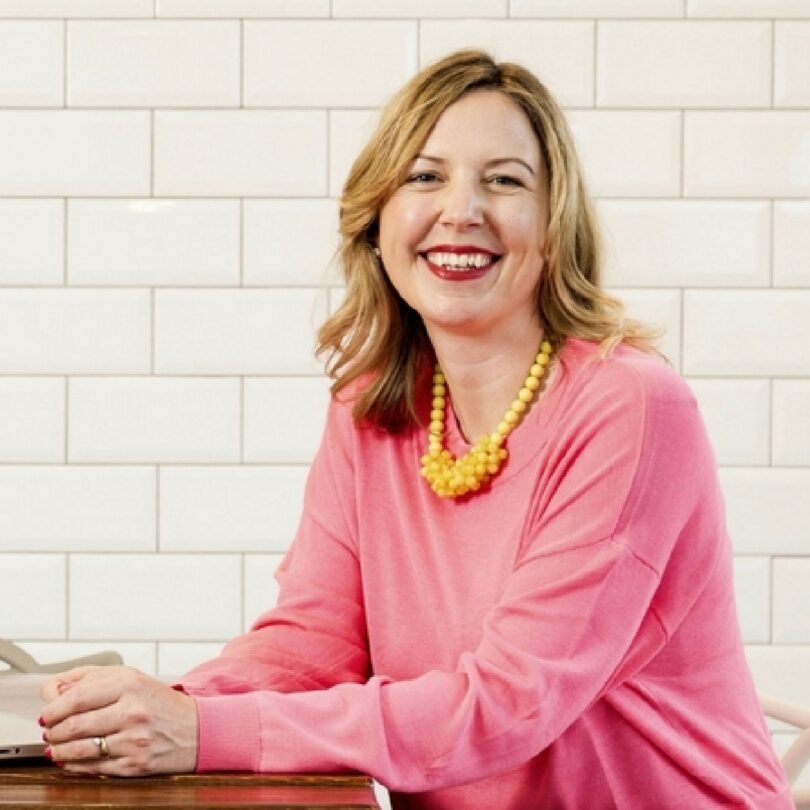




Rachel Clark, founder of sustainable shampoo brand Nut and Noggin, shares how she turned corporate burnout and grief into a thriving e-commerce startup—built from her kitchen table with £20,000 and no outside investment.
Rachel Clark is the founder of Nut and Noggin, a sustainable shampoo bar brand built around plastic-free beauty and mental health giving. In this episode of the Sound Advice podcast, Rachel tells host Bex Burn-Callander how she turned corporate burnout, personal grief, and roughly £20,000 in startup capital into a fast-growing e-commerce venture that has attracted celebrity fans including Lily James and Kristin Scott Thomas.
Rachel explains how she moved from a 20-year corporate career into building a beauty business on her own terms, why she dropped a far more expensive product idea in favour of a simpler shampoo bar, and what it really takes to grow a sustainable e-commerce business without outside investment.
For anyone interested in beauty business startup tips, recovering from corporate burnout, sustainable e-commerce, how to start a business, or realistic UK startup costs, this episode is packed with practical details.
In this episode, Rachel covers:
- How to validate a product idea without venture capital—Rachel launched with £20,000 and tested demand with a pre-launch email list of about 600 subscribers.
- Why simplifying your product to get to market beats waiting for a perfect idea—Nut and Noggin dropped an early £100,000 custom-app concept and launched a simpler MVP instead.
- How to calculate your maximum social ad spend based on average order value and profit margin.
- How to earn organic celebrity PR through a genuine brand story, strong press coverage, and a charity-led mission.
- Why corporate burnout can be the catalyst, not the obstacle, to starting a business when the work feels more aligned with your values.
Listen to the full episode on Spotify, Apple Podcasts, or YouTube—or read the full transcript below.
- How Rachel Clark founded Nut and Noggin: The origin story
- How to launch a product with limited capital: The MVP approach
- Corporate burnout and grief as a startup catalyst: Rachel’s story
- How to manage burnout as an entrepreneur: Mindset and daily routines
- How Nut and Noggin launched on Black Friday 2019 (and why timing doesn’t matter)
- How to build an email list before launching your e-commerce business
- How to calculate your maximum social media ad spend (the startup formula)
- How Nut and Noggin attracted celebrity fans: Free PR strategy for startups
- How to handle stockouts: Customer communication during a stock crisis
- How much does it cost to start a beauty business start up?
- How to structure a co-founder relationship when one partner has a day job
- Should you take investment for your startup? The mental health and financial trade-off
- How Nut and Noggin’s mental health mission drives customer loyalty
- Frequently asked questions about starting a beauty business
How Rachel Clark founded Nut and Noggin: The origin story
Rachel Clark says Nut and Noggin began with two ideas: create a product that gives back, and avoid adding more plastic to the world. She explains that manufacturers initially pushed for high minimum orders and plastic-bottle formulas, so she and her co-founder pivoted to a plastic-free shampoo bar that better matched their values and their market.
Bex Burn-Callander:
So what made you want to launch this business? I mean, was it about the sustainability angle? Was it about a great hair product? Tell us everything.
Rachel Clark:
We set up the business – myself and a co-founder – and we’d both been writing about consumer products and beauty products for about 20 years.
Well, 40 years between us. Good God.
And I wanted to set up a business that gave back. So it was really inspired by the story behind brands like Toms and products that would give back with every sale.
And so kind of that’s where it started.
Sustainability was something that was really growing in people’s minds. We started going to see manufacturers and talking about shampoos, which is obviously a product for your head, which is where the mental health angle came from.
And they kind of looked at us… they thought we were bonkers because why would you want to go against a load of multinationals?
And they kind of looked at us as if we were crazy when we said, well, is it possible to live without plastic in these products?
We don’t want to create more plastic in the world.
So we had to come home with our tail between our legs, from several manufacturers, because they wanted a huge minimum order quantity.
And they just wanted to stick shampoo that was a basic formula and put it into lots of plastic bottles and just bring more plastic on to the market.
So we really didn’t feel that that was for us and for now as well for our friends and family when we were talking to them.
So yeah, that’s where the shampoo bar idea came up and that’s kind of where Nut and Noggin began.
Nut and Noggin started by solving for mission and product fit at the same time: a give-back model, a sustainable format, and a clear way to stand out from other brands.
How to launch a product with limited capital: The MVP approach
Initially, Rachel and her partner considered an ambitious idea: a custom shampoo app. But that could have cost around £100,000, so they stripped it back and launched a simpler Minimum Viable Product (MVP) instead: a shampoo bar with a strong sustainability angle and repeat-purchase potential.
Bex Burn-Callander:
As you say, shampoo is a really competitive and crowded market. So why was it shampoo? Of all the beauty things that you could have gone with, why was that the one?
Rachel Clark:
Yeah. Well, that’s a good question.
So obviously, there’s just thousands of different brands and SKUs that you could start with. And we actually started off with this big idea about customisable shampoo, and we were going to get an app developed.
I had a friend of a friend who was working on Formula One technology, and he was able to create this phone app where you could kind of brush your phone over your hair.
And then it would tell you how healthy your hair is, which is still a great idea, to be fair.
But it was so costly and just such a barrier to us actually getting started that we were like, hang on a minute, this customisable shampoo, there were other brands in the US doing it who had massive venture capital funding.
And we just didn’t.
So we were like, right, how do we make this as simple as possible, so that we can get a first product out there and test the marketplace and also create a sustainable brand that’s not going to add to all this plastic pollution that we’ve got such a massive issue with?
So that’s kind of how we got to shampoo and how we got to shampoo bars, specifically.
Bex Burn-Callander:
And then with the actual recipe, I suppose it’s a recipe for the shampoo bar. I mean, you mentioned how the system works.
You just go along to the manufacturer. You had to presumably formulate something from scratch. So how did you do that?
Rachel Clark:
Yeah, it was a real journey, because I mean, there are shampoo bars out there, and obviously there’s really great brands like Lush, and they’ve done so much good work with creating plastic-free brands and testing the marketplace. And having lots of customers say that that’s what they want and where it’s going.
But the shampoo bars that we tried often had lots of sulphate to create lots of foam. So everyone’s kind of got used to all these bubbles and this lovely bubbly experience, but then it kind of strips your hair of all its natural oils.
So we knew we had to create something that didn’t leave us with scarecrow hair.
And that was something that we were both passionate about, just in terms of getting the right formula that we could get people to buy into, but also get people to repeat purchase.
People are never going to swap from a normal liquid shampoo if it’s not creating the right results. So it had to work, whatever we decided to launch with had to work.
But yeah, like you say, the manufacturers were kind of laughing at us and saying, “well, we don’t have that formula at the moment.”
But luckily, we came across a really small artisan manufacturer who was just developing some base formulas for shampoo bars that would be a little bit more natural and a lot less sulphates. Well, in fact, no sulphates.
We worked with them to develop something that would have some UK ingredients in as well. So the first shampoo bar that we’ve launched has actually got flaxseed oil in, which is really good for omega-3 and nourishing your hair.
And it’s also got British brewed beer. And beer has always been a bit of an old wives’ tale for adding shine.
But it’s actually quite well known that it does add shine because it helps your amino acids and builds the proteins that your hair relies on for shine.
So, we’ve added those ingredients in, and that’s kind of how we developed our own formula as well.
A simpler MVP let Nut and Noggin test demand without burning cash on a complicated first version.
Corporate burnout and grief as a startup catalyst: Rachel’s story
Rachel spent around 20 years committed to a corporate career before burnout and the sudden loss of her father pushed her to reassess what mattered. Despite the disruption caused by grief, the strong emotions helped clarify the path forward and gave her the push to build something more aligned with her values.
Bex Burn-Callander:
I want to talk about how you built the business and how you created the brand. But I want to go back just quickly.
Because you mentioned your previous life, your previous career, and I know from a previous chat with you that basically burnout was something that prompted you to start your own business.
Can you tell us about your former career and what happened that made you think, “right, that’s it. I need something new.”
Rachel Clark:
That kind of sounded a bit of a paradox when you said, well, “burnout’s the thing that prompted you to start your own business.” Because now looking back, I’m like, “what was I thinking?”
Because starting your own business is such a challenge in itself, but it’s a very different challenge because you’re working towards something that you’re really passionate about and that you’re 110% in every single day and ideally want something that is aligned with your own values and all of those things.
So I had many reasons why I kind of worked through the corporate career ladder for about 20 years working with lots of different multinationals and growing entrepreneurs and working with some amazing people and some growing businesses for other people.
But I got to the point where I’d kind of got as far as I could go, I felt, within corporate life, and I was helping other entrepreneurs and entrepreneurial people grow their businesses.
And I’ve kind of got to the point where I thought, “well, actually, I’m sure I could do this myself, if I’ve got all these skills that I’ve built up over all this time, but I’m not using them.”
And then, I actually lost my father, and he was kind of the reason why entrepreneurship was part of my DNA, if you like.
He was an entrepreneur himself, and we lost him really suddenly.
I’d already been going on yoga retreats and helping me to understand how the mind works and all of those things.
So I had that as a background during that really incredibly tough period of grief and loss, but it really made me kind of galvanize what I’d already been feeling inside was “let’s live a more aligned life with how you kind of want to live your life,” and it just shows you that life’s really short.
So that was kind of the trigger, I guess, that happened to make me actually do it and take the leap.
Bex Burn-Callander:
Did you feel that maybe you wanted to turn your grief into something constructive because often it can feel like an overwhelming emotion and just the act of channelling it into something, building something new can be quite cathartic?
Rachel Clark:
Yeah, absolutely.
It’s just like the rug’s pulled from under you and so everything that you’ve kind of built towards and think is really important, suddenly becomes totally re-evaluated.
And once you’re kind of processing those massive emotions and that kind of huge thing that’s going on in your life, absolutely.
It was really important for me.
It kind of flushed all that stuff away in terms of what I thought was important to me, how I wanted to live the rest of my life. It can be really life-affirming.
I think that it kind of creates this opportunity, in a way, to be able to move forward.
And also to be really brave with your decisions, because you realise that actually life, we’re not here forever, and unless you make some big decisions that feel good and that really hit your own values and feel aligned, then that’s where you can really make some massive progress forward.
For Rachel, burnout and grief didn’t just trigger change; they made an aligned business feel urgent and necessary.
How to manage burnout as an entrepreneur: Mindset and daily routines
Rachel is candid that starting a business is as stressful as burnout, just in a different way. Her approach is to protect her energy with simple routines—yoga, gratitude, and daily intentions—while staying focused on the one task most likely to move the business forward.
Bex Burn-Callander:
We were both laughing a moment ago at the irony of going from a really busy corporate life that’s approaching burnout and then starting a business and thinking that it might be less stressful, which, of course, it’s a different kind of stress, as you said, but it is still very stressful.
So how do you manage that pressure?
Rachel Clark:
Yeah. It’s very interesting, because if you’re working primarily on your own, which obviously a lot of us have been doing over the last year, then it’s very much a personal mindset.
So I’m really careful about where I put my energy. And so I do my yoga and I try to do gratitude meditations when I remember; it doesn’t always happen.
But I try and create an intention for every day.
Bex Burn-Callander:
Can you give me some examples of your intentions?
Rachel Clark:
I’m full of positive intentions.
There’s a really great book, actually. I think it’s called The One Thing, and it just focuses your mind because, obviously as an entrepreneur, you’ve got a hundred things that you could be doing every single day.
And this is more about working on the one thing that’s going to move the needle forward.
But yeah, intentions might be “today I’m going to feel calm and happy,” or it might be “today I’m going to speak to three people and feel connected.”
So those are some of the things that I try to use.
Rachel manages founder stress by keeping her routines simple and her daily focus narrow.
How Nut and Noggin launched on Black Friday 2019 (and why timing doesn’t matter)
Nut and Noggin launched the day before Black Friday 2019, not because it was part of a grand strategy but because product delivery happened to coincide with the date. Rachel says the real validation came when orders stopped coming only from friends and started coming from strangers.
Bex Burn-Callander:
Back to the business, right, before I get completely sidetracked, because I could talk about this a long time.
So how did you get your first customer? Do you know who the first person was that bought a bar?
Rachel Clark:
I do, I know exactly who it was.
It’s a friend, and it’s a guy as well. Probably about 98% of our customers are women, but he’d actually very kindly bought it for his wife.
Basically, the product arrived the day before Black Friday 2019. My husband, we were chatting about it and he said, “You’re going to have to launch this weekend.”
And I was like, “Well, I don’t feel ready. I’m not ready.”
We had a thousand things to do on the website, and an email list, and marketing, and I thought, “Oh, my God, he’s right. We’re going to have to do it.”
So we actually launched inadvertently on Black Friday 2019, which was totally unplanned.
When we started getting customers, it was friends at first. I was like, “Oh, God, okay. This is everyone that we know.”
And then it was when we started seeing people that I didn’t actually know of coming through, I was like, “Oh, my God, this is actually going to sell. This is actually working. So far so good.”
So that was so exciting just to be able to know that people were responding to it and wanting to join in to get the shampoo bars, but also to give back.
So yeah, that was a really exciting time. Very stressful as well.
Bex Burn-Callander:
When it’s not just your best mate buying 50 bars, it’s actually a complete stranger.
Rachel Clark:
Exactly. I was still very disappointed with my mum. I said, “Where were you, mum?” She didn’t even buy one that weekend. She went, “I thought you’d bring me one.”
The launch mattered less than the proof of demand: strangers buying confirmed the brand had real traction.
How to build an email list before launching your e-commerce business
Before launch, Rachel built an email list of around 600 subscribers by asking contacts to forward emails and by running a spa-day giveaway aimed at the right audience. She says that strategy was inspired in part by the Harry’s launch case study and gave Nut and Noggin a direct channel to early customers from day one.
Bex Burn-Callander:
What did you do to reach the strangers? Presumably you might have sent some emails or done some social media posts to your immediate network and your friends, but then how did you reach everyone else?
Rachel Clark:
Yeah, it’s a great question.
So I’d researched it to within an inch of its life. How are we going to get the message out there? What’s working at the moment? Which of the brands are doing what?
So I’d heard, I think it was [U.S. angel investor and author] Tim Ferriss on his podcast, talking about the launch of Harry’s, which is a really cool shaving brand, men’s shaving brand.
And they’ve really taken on the likes of Gillette, and they just did a great job in terms of launching it and marketing it.
And he actually shared the whole case study of what they did in the States, which was to create kind of a giveaway and to really build your email list before any sort of launch.
So I knew that email was going to be a really important way of communicating with our customers. And also, it’s just a really direct way to let people know what’s going on and give behind-the-scenes updates and things like that.
We’d grown an email list to about 600 names. Probably 100 were friends and family.
And then we asked for people to forward emails and if they knew of anyone else that they thought would be interested.
And we did a little giveaway, so we actually gave away a spa day, which obviously would be bang-on for our target audience.
So we launched to an email list, but it was a small but perfectly formed one.
And then after that, it was very much trying to get some press and looking at things like Facebook and Instagram advertising as well.
And we kind of continue to do all that, but it’s … you can’t do everything on day one.
Bex Burn-Callander:
It’s expensive, isn’t it? Because social media adverts, it used to be a pittance, and now, it can really just drain your entire marketing budget.
Rachel Clark:
Absolutely, yeah. You have to be so careful not to just blow all your budget on social media.
So we’d go in sort of 90-day sprints, I call it, and we’ll look at … we’re very careful to not overspend on Facebook ads because we’ve already got quite a low average order value in terms of how much people are actually spending on shampoo.
It’s not a Cartier watch people are buying, for example.
Bex Burn-Callander:
A Ferrari.
Rachel Clark:
Yeah, a Ferrari. So you’ve already got a lower spend and how much you can spend on your marketing, so you have to be really careful that it’s actually working and just making the most of your marketing books.
So yeah, absolutely. We’ve got to keep a real close eye on that.
Nut and Noggin launched with a small but valuable email list, proving that pre-launch audience-building can start with simple referral mechanics and one strong giveaway.
How to calculate your maximum social media ad spend (the startup formula)
Once you know your average order value, you have to work backwards to see how much you can afford to spend to win a customer.
For a product like a shampoo bar, where the basket value is relatively low, that means watching ad spend closely, understanding your margins, and knowing that even a small overspend on Facebook or Instagram can wipe out profit.
Bex Burn-Callander:
That’s interesting. So did you have a metric that you use, like the maximum spend per conversion?
Knowing how much your audience will spend in an average basket so that’s the maximum you can spend to convert?
Did you get as nitty gritty as that?
Rachel Clark:
Yeah, absolutely. I’m not a finances person.
But I’ve quickly become one because when you’re looking at your stats and you’re looking at your sales versus your marketing spend, then all of a sudden you’re like, actually, how much profit is each, say, shampoo bar generating, and how much do we have to spend on advertising or free product or influencers and things like that?
So yeah, we absolutely get totally nitty gritty on the cost per acquisition.
It’s an ongoing process, because obviously you don’t know what everything’s going to cost at first.
You’ve got costs coming in left, right, and centre for design work, branding, website, as much as you can try and do yourself.
But yes, so it takes a while to kind of filter through and know what your actual profit margins are.
But yeah, it’s been a real baptism of fire in that respect in terms of getting the financials up to speed and being able to forecast for what we can do in future as well.
What is cost per acquisition, and why does it matter for e-commerce?
Cost Per Acquisition (CPA) is the amount it costs your business to win over a new customer. The formula for it is:
CPA = Total Marketing Spend ÷ Number of Customers Won
For instance, if you spend £500 on Facebook ads and get 20 new customers, your CPA is £25.
The key is to keep your CPA lower than the amount customers spend: If it costs your e-commerce business £25 to gain a customer but they only spend £15, you’ve actually lost £10.
Your maximum ad spend should be based on margin, not guesswork, because low-value e-commerce products leave very little room for wasted acquisition costs. Small business accounting software is a great help in calculating these figures.
How Nut and Noggin attracted celebrity fans: Free PR strategy for startups
Rachel didn’t engineer celebrity traction through paid placements. Nut and Noggin built early visibility through press coverage in top magazines, then gained further momentum through organic word of mouth and its mental health charity model. That led to names such as Kristin Scott Thomas and Lily James discovering the brand.
Bex Burn-Callander:
But you’ve had some great free PR. Can you tell us about how you’ve got these celebrities shouting about Nut and Noggin.
Rachel Clark:
It’s amazing, isn’t it? We have had some really fab people talking about Nut and Noggin.
So we actually got featured in press quite early on. So Vogue ran a piece on sustainability. We’ve been in Glamour magazine, Red magazine, Grazia.
Stylist did a stylist love song on Nut and Noggin, and people were really responding to, I think, A, our branding, but B, the story behind it.
So very much the fact that we give back to mental health charities that are helping young people and children, and people just love that.
So they were really kind of wanting to help us in that way.
But yeah, we often have customers who will recommend to others. It might be mums recommended to daughters, or sisters recommending to their best mate, which is obviously the best way to market a product, lots of word of mouth.
But we had a lady approach us on Instagram, and she said, “Oh, my mum has got me onto this.” And she posted about it.
She said, “I absolutely love this new brand, Nut and Noggin.”
And it turned out she was a makeup artist and she was actually working with the amazing Dame Kristin Scott Thomas at the time, and so she tried it, too.
And then she posted about us.
And then Lily James got involved and she said she’s going to order some. And it was kind of just this lovely, really natural organic way of getting the word out there.
So things like that often happen.
We’ve got a few other celebrities who use us, too, and it’s stuff that you just can’t predict and you can’t plan, but it’s a really nice thing when it happens.
Bex Burn-Callander:
So how fast are you growing now? Can you share how quickly customers are coming on board?
Rachel Clark:
Yeah, absolutely. We’re growing about 200% every month, so it’s a really exciting time.
A lot of that is word of mouth. So we’re really diligent about asking people for referrals.
So from the start, we’ve always had a refer-a-friend programme. So if you refer a friend, you both get 10% off your next purchase.
We kind of learned from the likes of even LinkedIn and some of the US brands that having a referral element can really help grow a brand quite quickly.
So that’s something we’ve really focused in on, and it seems to be working. And it’s sometimes really simple ideas and concepts can work the best.
So even though there’s kind of lots of shiny objects out there advertising and TikTok and all of these things that we could be doing, it’s kind of just learning that some things work better than others and going down that road instead of wasting lots of time on things that might look shiny and bright but might not work so well.
Bex Burn-Callander:
Have you had any of those experiences where you’ve maybe put too much effort into something that ended up being a bit of a damp squib, any kind of nightmare moments?
I know it’s only been a couple of years, but anything you can share?
Rachel Clark:
I mean, it wouldn’t be a nightmare. It would be probably a good nightmare.
But in lockdown one, we sold out. Everyone was at home, everyone was on Facebook. We were running Facebook and Instagram ads.
We were getting lots of press and PR, and we sold out. We just hadn’t ordered enough. It was like, “Oh my God. Now what?”
It was a really nice problem to have, but at the same time, when you’ve never hit that challenge before, and obviously it was totally unprecedented what was going on at the time.
People were looking for lots of self-care tips and feel-good brands. I think, speaking to other founders, lots of people have the same issue, and other people were importing from China as well, and that was hitting their businesses.
To sell out, I think that was probably the biggest challenge.
Luckily, there’s lots of ways you can get round that online now with online businesses. You can set pre-orders up.
It’s not always necessarily such a bad message that you sold out, because obviously everyone wants it. But yeah, at the time, it was a massive challenge and it’s like, “How are we going to get more really quickly?” Because the manufacturer was already struggling to keep up with their orders as well.
So yeah, it was a challenge, but a good one.
Nut and Noggin’s strongest PR came from a brand story people wanted to pass on, not from forced outreach or manufactured hype.
How to handle stockouts: Customer communication during a stock crisis
When lockdown demand surged, Nut and Noggin faced a restock delay of about three and a half weeks. Rachel says the team handled it by communicating clearly on email and social, setting up pre-orders, and turning a stock problem into a trust-building moment with customers.
Bex Burn-Callander:
But what did you do then? What process did you follow?
Rachel Clark:
When we realised it was going to happen, it was like, “Okay, we’re going to sell out.”
We’re not able to get our next restock in for, I think it was three and a half weeks; what can we do? Actually, you can set up pre-order managers where it’s like an app that you install.
We actually just communicated really well with our customer base on email and on social media. We’re like, “This is what’s happening. This is where we’re at. Thanks so much for all your support. You can still get product. It will be here in about three and a half weeks, we think.”
Just over-communicating with our people, really.
That was how we got through it. But having the pre-order app enabled on the website was a massive help as well.
Bex Burn-Callander:
It’s a great lesson, and I love to hear how different founders, when they do come across a hairy situation, how they cope and how they turn it to their advantage, and obviously, selling out …
When you go to a website and it’s like, “this product is sold out but will be back in in a few weeks,” you were like, “Oh my God, I must be back in three weeks if everyone wants this thing.”
Then you do, you turn it into an opportunity.
Rachel Clark:
Yeah, absolutely. That’s kind of what we did.
Low stock levels became manageable because Nut and Noggin communicated early, stayed visible, and gave customers a way to keep buying.
How much does it cost to start a beauty business start up?
Rachel and her co-founder launched Nut and Noggin for approximately £20,000. This covered stock, branding, and website costs, while they did the copywriting and marketing themselves.
She recommends aspiring beauty founders deal in-house with at least one of marketing, e-commerce tech, or operations. This helps you avoid spiralling agency costs.
Bex Burn-Callander:
Do you mind sharing a little bit about how much it actually costs to get a business like this off the ground?
Because I’m sure a lot of people will be like, “Well, I’d love to start a business. I’ve got maybe £5k in savings. Would that do it?” Or I’ve got a bit more or a bit less.
How much did it cost you guys to get this going?
Rachel Clark:
Yeah, please do ask that one.
Yeah, I’ve already explained that we started off with this fantasy idea of a clever app that we were going to have developed and a customisable shampoo.
So it was going to be like a different product for every single customer, and we put the pricing together for that and it was going to be about £100k. We soon backtracked and decided we could not afford that in any respect.
We actually didn’t want to take any outside investment early on because we wanted to prove that the concept was going to work.
It was very much, right, what savings do we have?
We’ve spent initially about £20,000, which I would say is really frugal. We did a lot ourselves in terms of creating the website, all the copywriting, all the marketing.
The branding we outsource, because I’d be rubbish at that.
We spent initially £20,000, obviously stock as well. It depends. You could start really small with a product and iterate from there, but we wanted to start with a bit of a bang.
But still that is really pretty frugal in terms of a small business startup fee for a consumer brand.
What did Nut and Noggin spend £20,000 on?
After abandoning an initial £100k plan for a bespoke app, Rachel and her co-founder opted for a frugal launch, self-funding the business with £20k in personal savings.
They concentrated their limited capital on professional branding and their initial stock order, ensuring the brand could launch with a high-impact “bang” without relying on outside investment.
*As a comparison, by March 2024, state startup support fund British Business Bank had doled out an average of more than £271.8 million per business to some 64,000 ventures.
| Expense Category | Description |
| Branding | Outsourced professional design (logo, packaging, and visual identity) |
| Inventory | The initial production run of shampoo products |
| Operational fees | General small-business startup fees and administrative costs |
| Total Investment: | £20,000 |
Bex Burn-Callander:
Would you say it’s really useful if you’re starting a business to make sure that whoever’s in the founding team, you have the skills in place already to cover a lot of those startup costs?
So you either have someone that is a great copywriter or knows about marketing or knows at least something to reduce the overhead at the beginning?
Rachel Clark:
Our business is operations-led, but then it’s growth led in terms of marketing.
You could save yourself a whole lot of money if you’ve got either the ecommerce side of things or the marketing side of things or the operations side of things.
But as soon as you start going out there and trying to get agencies to help you, that’s when the cost can just spiral.
I’ve seen so many business owners get totally ripped off as well, which is frustrating.
You can do a lot yourself, but you really have to be in that able-to-grow mode yourself. My learning curve, even though I’ve got a marketing and PR background, was just huge.
It was like twice a day I was on Google or YouTube looking at how on earth do I do this?
That’s the brilliant thing about podcasts as well, is you can learn so much about other people’s businesses and where they’ve gone wrong, where they’ve got right, what’s working, what’s not.
You just didn’t have access to that 10 years ago.
It’s a brilliant time to be a founder if you’re willing to do all the work and grow it organically yourself at first.
How to reduce startup costs when launching a beauty brand
To keep your initial overheads low, follow these principles from the Nut and Noggin journey:
- Audit your founding team: ensure your team has the DIY skills to cover operations, marketing, or e-commerce in-house before paying for outside help.
- Avoid agency “spiral”: be wary of outsourcing too early; costs can quickly escalate or lead to poor value for money if you haven’t mastered the basics yourself.
- Embrace the “learning curve”: use free resources like YouTube, Google, and podcasts to bridge your skill gaps.
- Prioritize your spend: focus your limited budget on the things you can’t do yourself—like high-quality branding and physical stock—rather than expensive custom tech.
- Iterate and grow organically: prove the concept works before seeking outside investment.
Nut and Noggin was able to launch frugally because the founders cut complexity, funded it themselves, and kept key skills in-house.
How to structure a co-founder relationship when one partner has a day job
Rachel and her co-founder were deliberate about roles from the start.
Rachel handles most of the day-to-day operations and marketing, while her partner, who still has a full-time job, supports with content and product ideas.
Clear lines of responsibility matter more than equal time split.
Bex Burn-Callander:
What’s the dynamic between you and your co-founder like? Do you have very specific roles? Is there much crossover?
Do you ever go to war with each other over anything?
Rachel Clark:
No, we’re good friends. My co-founder actually has a full-time job anyway, but she really helps with things like content and ideas for new products and things like that.
We were very careful to be very specific about who does what and who gets involved with what. I do most of the everyday operations and marketing. I think it’s really important.
Having been in businesses with other people in the past as well, we were talking about this earlier, but it can be like a marriage so you have to be really careful with who you go in with, what their skill sets are, and just having other people that complement your skill set or have a different skill set to you.
Bex Burn-Callander:
Remove any friction right at the beginning.
Rachel Clark:
Yeah. Although, I don’t think friction is necessarily a bad thing. It just depends how it’s handled.
Bex Burn-Callander:
Julien Callede, the founder of Made.com, said on a much earlier episode said that actually sometimes it’s good to have founders that you disagree with because it ends up with a much better decision because you really fight for what you believe in.
You have to take on someone else’s counsel and it ends up improving the final result. I thought that was quite interesting.
Rachel Clark:
Yeah, I can believe that. I did listen to that one and it’s fascinating, because I think that they had four co-founders, didn’t they?
That’s a lot of people and a lot of ideas, but I think it’s just being really specific about who does what and who’s best at what as well, is how we’re using it anyway.
A co-founder partnership works better when responsibilities are defined early and matched to each person’s strengths and availability.
Should you take investment for your startup? The mental health and financial trade-off
Rachel explored outside funding, including the Dragons’ Den TV programme, but came away more convinced that profitable, organic growth suited the business better at that stage.
She is open to future options such as crowdfunding, but she’s wary that external capital would bring pressure, timelines, and expectations that can affect both decision-making and mental health.
Bex Burn-Callander:
Rachel, you said you didn’t want to take on any outside investment at the beginning. You wanted to keep it very much your own venture. Is that changing?
I can imagine, with the pace of growth that you’re experiencing, that maybe you might have to take on some finance. What are you going to do in terms of external investment?
Rachel Clark:
Yeah, that’s a really interesting question.
I don’t think we’ve discussed this before, but I actually did the filming for Dragons’ Den. Every season, they do about 100 founder entrepreneur interviews. Only about 70 get through.
We did it, we got there, and I didn’t fall flat on my face and I was quite pleased with myself.
But I didn’t get investment, but it was a really great experience just in terms of going through all the due diligence and meetings, obviously, the dragons as well, who were amazing and actually really friendly.
Bex Burn-Callander:
Are you going to be on TV?
Rachel Clark:
We didn’t get on, but I was in touch with another couple of beauty founders, and they also went through the whole process and also didn’t get on, so I was like, “Oh, okay, I can solace myself with the fact that not everyone gets on.”
People keep ringing me now and they’re like, “Are you on? Are you on?”
You have to be really up to speed with all your financials, all your projections, all the things that it’s not my zone of genius, I would say.
But that whole process and even just going to think about going for investment is a really great thing for anyone to go through, so I would recommend it if anyone’s got the opportunity.
Bex Burn-Callander:
Now you’ve got your presentation style down pat, you’ve got your pitch deck. Would you look elsewhere? I suppose the question is, do you need money or would it just be nice to have some additional support maybe?
Rachel Clark:
Yeah. That’s the thing. It’s this lovely idea of, “Oh yeah, let’s get investors on and we can go massive and we can go really quick.”
Or is it, “I want to build it a bit slower and see how we get to and make sure we’re profitable,” because there are so many founders out there who take on big investment and still don’t have a profitable business model.
So it’s really important to me, personally, just to make sure everything’s profitable and that we grow organically as opposed to going really big, taking venture capital, getting people in, and having that huge pressure as well.
We talked about mental health. It’s a really big call to have external investment and external investors who will want their money back in, it could be two years could be three years. So yeah, I think we’re doing the right thing at the right time for us.
Bex Burn-Callander:
Yeah, and it strikes me that Noggin is the kind of business as well that if you did need to raise money, crowdfunding would work so well because you have all these passionate fans.
Or something like shampoo bonds. You remember? There used to be chocolate bonds and shaving bonds and it’s just people buying into a business.
Rachel Clark:
We have looked a little bit into crowdfunding, but Dragons’ Den came along and then we’re like, “Actually, let’s just focus on this.”
It’s not something we would definitely say no to at the moment, so that could be a really good way to get some money in as well.
What is crowdfunding, and is it right for a beauty startup?
Crowdfunding is a way to raise capital by collecting small investments from a large group of people—usually your own customers and fans—rather than a single wealthy investor.
For a beauty brand like Nut and Noggin, crowdfunding is a good fit because it taps into a passionate community who already love the product. It’s an ideal middle ground for founders who want to scale but are wary of the intense pressure and rigid timelines that come with venture capital.
Ultimately, it works if you want to speed up growth without sacrificing your mental health or your commitment to a profitable, organic business model.
Third-party investment can accelerate growth, but it also changes the emotional and financial shape of the business.
How Nut and Noggin’s mental health mission drives customer loyalty
Nut and Noggin’s mission is built into the product itself: £1 from every sale goes to charity. Rachel links that directly to causes that matter to her and suggests that customers respond not just to the shampoo but to the story and purpose behind it.
Bex Burn-Callander:
Rachel, tell me a bit about the mental health side. When someone buys a bar, what happens to that purchase money?
Tell me a bit more about why you’re so passionate about supporting mental health charities.
Rachel Clark:
There’s a really cool quote that goes around on Instagram every now and again, and I think it’s something about when a person buys from a small business, someone does a little dance.
That actually does happen. That’s the first thing that happens with your purchase.
So that’s the first thing that happens with your purchase, but for our shampoo bars, £1 from every purchase goes to three different charities that we’re working with.
One of them is the fabulous Winston’s Wish, which is a national charity that was set up to help children and young people and also families going through grief.
So obviously that’s something that resonated with me hugely.
And then we also support a charity called the Yoga Therapy Foundation, who helps support young people facing grief, depression, and anxiety.
And that’s something that their founder is really passionate about.
And she says over the last 20 years, she’s had so many more young people coming to her with problems with depression and anxiety.
And then we also help a fab charity in Leeds called the Marketplace, which is also targeting young people who are facing difficult times. So that’s where our customers’ hard-earned money goes when it comes through to us.
The brand’s charity model gives customers a clearer reason to care, buy, and recommend it to others.
Frequently asked questions about starting a beauty business
You don’t usually need a general selling licence to sell cosmetics in the UK. But you do have to comply with UK cosmetics law before selling to consumers in Great Britain.
That means having a named Responsible Person with a UK address, making sure the product has been safety assessed, keeping the required product information, using compliant labelling, and notifying the UK’s Submit Cosmetic Product Notifications (SCPN) service before it goes on sale.
That Responsible Person can be the business owner. If you are selling in Northern Ireland, the rules and notification route differ from Great Britain, so that needs checking separately.
Yes, many people can run a beauty business from home in the UK, but it depends on what kind of business it is and how it affects your property.
You may need permission from your landlord or mortgage provider, and you may also need to check with your local planning authority or local council if, for example, you will have lots of customers visiting, frequent deliveries, external signage, or any activity that changes the residential character of the home.
You may also need to look at insurance and whether part of the property could be assessed for business rates. So yes, home-based beauty businesses are possible, but the setup is not automatically friction-free.
There is no special set of rules applicable to homemade products.
If your homemade balm, scrub, cream, soap, or other item counts as a cosmetic product, it still has to meet the same core legal requirements as any other cosmetic sold in Great Britain: a Responsible Person, a safety assessment, compliant ingredients and labelling, a Product Information File, and SCPN notification before sale.
What has changed in recent years is that the UK has continued to update cosmetic rules by restricting certain substances and setting dates by which products already on the market must adhere to those rules.
So “homemade” does not mean “exempt.” Once you sell a cosmetic product in the UK, you are expected to meet the same legal standards as a larger brand.
Subscribe to the Sage Advice newsletter
Join more than 500,000 UK readers and get the best business admin strategies and tactics, as well as actionable advice to help your company thrive, in your inbox every month.

Browse more topics from this article
Explore more wisdom

Invoice tips round-up: Essential advice to help you get paid on time
We’ve compiled some resources to help with your invoice processes, including how to create an invoice and a set of free invoice templates.