5 key stages in the production process and how to track success
Explore the 5 key stages in the production process and learn more about the best milestones to track for success.
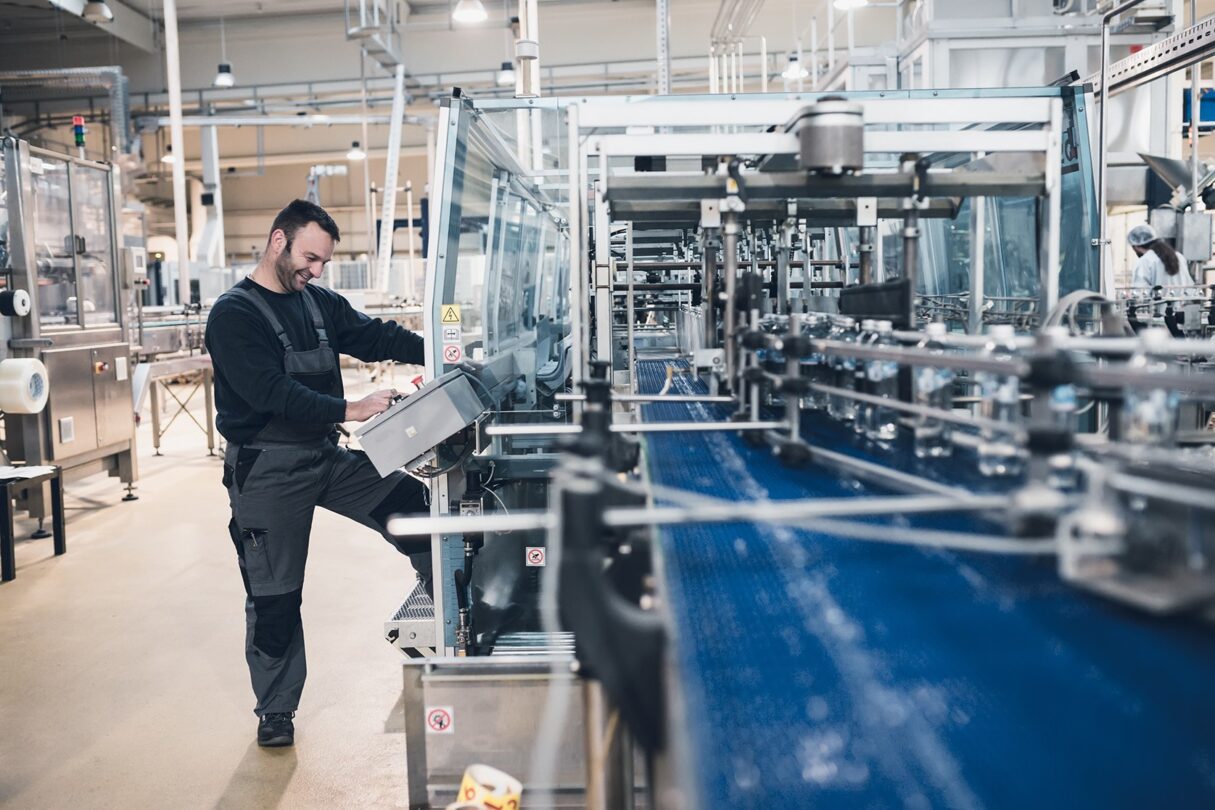

Late shipments, excess inventory, and unsatisfactory quality are all symptoms of poor control.
You can remedy this by implementing software that improves visibility throughout the production process, from pre-production to shipment and delivery.
Manufacturers configure production to suit the characteristics of the product they sell.
Some operate as job shops or craft businesses, while others produce large quantities of a single item through a dedicated production line.
Despite their differences, all need effective monitoring and control to meet your customers’ expectations.
In this article we’ll discuss the production process, including its contributing factors and tracking key milestones.
Here’s what we’ll cover:
What is the production process?
Production entails transforming raw material inputs into higher-value goods and is often considered the heart of supply chain management.
The production process is a series of value-adding steps that transform raw materials from one state to a more useful form.
It spans every aspect of manufacturing, from raw material procurement to manufacturing processes, packaging of the final product, shipping, and dispatch.
There are four types of production:
- Mass production is where a production system is geared towards making very large quantities of a single product.
- Batch production handles a range of related but different products. Variations might take the form of colors, sizes, or pack formats. Manufacturers produce a batch of one product, before producing a similar product in a different size, shape, or format. Large products made in small to single-piece quantities often use a job production process. Here, the inputs come to the product rather than being moved from machine to machine and department to department. Shipbuilding is a prime example.
- Service production is a defined and controlled process that delivers a service rather than a physical product. Banking and IT are examples of industries that use service production. In some cases, the service may have physical characteristics, like in the food preparation industry.
- Customized production takes two forms: craft production and mass customization. Craft production is when an artisan makes one or a very small number of pieces, typically using only simple hand tools e.g. dressmaking. In mass customization, a manufacturer gears up to produce large quantities but can tailor each item to suit individual customer requirements.
It’s important to keep in mind that these processes are seldom exclusive. Often, an activity that’s predominantly one type will incorporate elements of others.
A supply chain diagram can help you visualize the flows and processes.
5 Key stages of the production process
Moving from product design to manufacturing entails planning and organizing the activities associated with production. There are five stages in the process:
1. Planning
Production planning involves detailing all the steps needed to turn a design or concept into a physical product and get it to the customer.
It forms the basis of a production schedule and ensures the resources needed—manufacturing equipment, materials, quality control devices, etc.—will be available.
Planning is essential to control production costs. It is the key to capacity planning and management and ensures everyone involved in the production process understands what they must do.
Planning can be simple. In fact, some businesses have success using a simple Excel production planning template.
2. Routing
Routing is a map showing the path materials, components, and subassemblies will take through manufacturing on their journey to become the finished product.
It shows the individual machines, which may be linked or configured as a production line or cell, or arranged in functional groups.
The routing will usually include cycle and setup time estimates and possibly also expected yields. This forms the basis of production scheduling.
3. Scheduling
With the routing defined, it’s possible to schedule the flow of work through the factory.
Scheduling involves considering batch sizes (in batch production), setup times, and required delivery or completion dates to determine when orders must be released to production.
Poor or inefficient scheduling may cause bottlenecks. Scheduling is less complex with continuous processes, but still necessary.
4. Dispatching
This is the release of orders, material, and sometimes tooling, to production.
It’s done at the time dictated by the production schedule.
The order paperwork accompanying the material often incorporates a barcode that is scanned in and out of each operation or manufacturing process.
5. Follow-up
Follow-up is a way of identifying improvement opportunities.
It compares actual performance with the production plan to identify variances or deviations.
These are used to refine the plan and possibly initiate factory improvement efforts, with the goal of reducing their magnitude to zero.
Key milestones for success
Reviewing performance after the order has shipped is good for identifying improvements to the production plan and the manufacturing process.
However, it doesn’t avoid the consequences of inferior quality, late delivery, or being short on quantity.
The best way of keeping every order on target is to track milestones at key stages, including:
1. Pre-production
A lot of things must come together before a production line can run. Details depend on industry and product, but common examples include:
- Material must be of the required standard.
- Colors must match.
- Packaging must be designed and produced to specification.
- Presses must be set up to produce metal shapes of the right dimensions and without cracking.
These points all form a pre-production milestone. If any of them are incorrect, the production run will almost certainly result in a product that either can’t be sold or can only sell for a steep discount.
Example: Pre-production tasks for personal care products
For personal care brands, confirming both colors and packaging samples is common before a production run.
Colors can vary slightly between suppliers and even from different machines, so it’s important to confirm they are correct before production starts.
In addition, if you’ll be using new tooling for packaging, it must be carefully inspected and signed off on first.
2. Production
During production, tracking progress against schedule and in terms of quality is essential.
This is to avoid any quality problems that would force rework or scrapping of parts, and to ensure the order or batch stays on schedule.
It requires visibility into manufacturing processes and, if not done, almost guarantees the product will ship late.
Example: Production tasks for cut-and-sew goods
In a business making apparel or other home goods using fabric, there are several activities to track. These could include the completion of primary processing steps like weaving and dying.
In such a scenario, setting up a production tracker is useful. Typically based on a template, this assigns each task, defines checkpoints, and provides details to help the team and suppliers execute.
Detailing expectations ahead of time reduces the risk of issues during production.
3. Pre-shipment
Customers expect high quality, a satisfactory appearance, and good performance.
To avoid complaints, warranty claims, or returns, your team must closely inspect the final product and packaging before shipping.
You should also check to see if there are any documented customer requests so that you can ensure they’re fulfilled before shipping.
Example: Pre-shipment tasks for food or beverage products
Food and beverage products are often subject to strict regulation and quality control. A brand selling edible products must ensure the pre-shipment process includes a check for appropriate documentation.
This may include requesting certificates of authenticity, quality release forms, and/or third-party testing documents from the supplier before moving goods into the Shipment milestone.
4. Shipment and Delivery
For your customers to be satisfied, they need to receive what they ordered, in the correct quantity, to the required standard, at the expected date and time.
You can accomplish this by cross-referencing each order against its documentation at each step of the process to ensure nothing is missed.
Incorporating a checklist or template that prompts these cross references is one way to avoid overlooking anything pertinent.
Similarly, you’ll want to make sure your customers have accurate and up-to-date shipping and tracking information.
For example, if their tracking link says that their “shipping label is being created” for days on end (even after the item has shipped), they’ll have no idea where their package is or when they can expect it.
This can reflect poorly on your business, so be sure to choose reliable fulfillment and shipping partners that employ organized, accurate, and transparent shipping practices.
How automation enhances the production process
Tracking progress against milestones takes time and effort—unless it’s automated.
Automating data capture and analysis can help by generates information faster, saving you time, minimizing errors, and improving overall operational visibility.
Using appropriate supply chain management software, such as Sage Supply Chain Intelligence, makes production data accessible, actionable, and auditable.
Sage Supply Chain Intelligence supports automated task and activity tracking throughout every type of production process, with centralized document management and payment tracking.
In addition to pre-configured milestones and automated check-ins with suppliers, the latest enhancement gives better visibility throughout the order lifecycle and production process.
Final thoughts
Effective production control is the foundation of consistent quality, on-time delivery, and customer satisfaction.
Whether your business runs a high-volume production line, a craft shop, or a hybrid approach, the same principles apply: planning, routing, scheduling, dispatching, and follow-up are essential to staying competitive.
Tracking milestones at pre-production, production, pre-shipment, and delivery ensures potential issues are caught early, rather than after goods reach customers.
Done well, this minimizes costly rework, late shipments, and excess inventory.
The complexity of today’s supply chains makes manual oversight difficult and risky. That’s where automation and supply chain management software can really help you up your game.
By digitizing routine checks, centralizing documents, and making data instantly accessible, you gain real-time visibility into every stage of the production process.
This doesn’t just reduce errors—it frees teams to focus on continuous improvement and customer service.
Ultimately, adopting the right tools and practices turns production from a potential bottleneck into a competitive advantage, ensuring your products are delivered with the quality, timeliness, and reliability your customers expect.