SaaS pricing models: What they are and how to choose the right one
Explore eight SaaS pricing models with real-world examples, pros and cons, and expert guidance to help you choose the right strategy for your business.
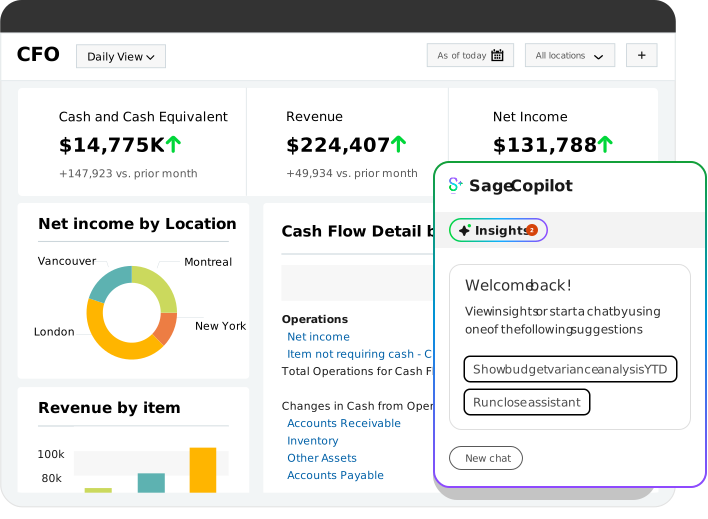
Maximize working capital with streamlined SaaS accounting and business intelligence that power strategic growth.
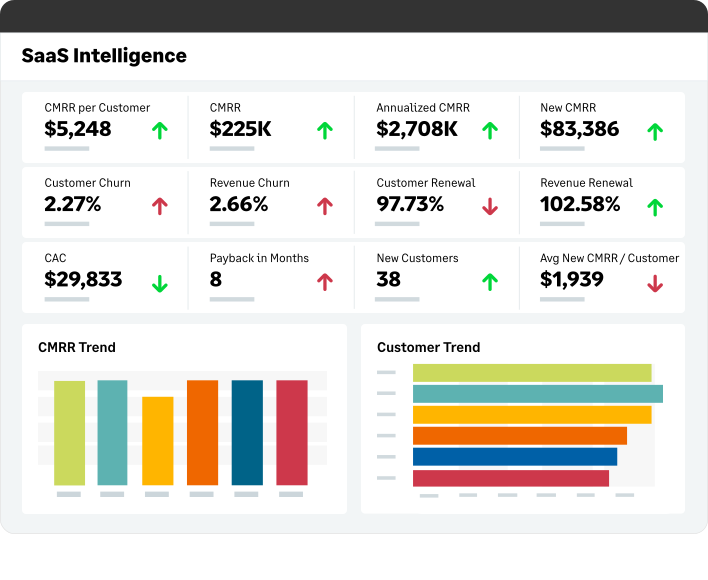
Build impactful financial reports to empower investment decisions with Sage Intacct SaaS Metrics and Subscription Analytics.
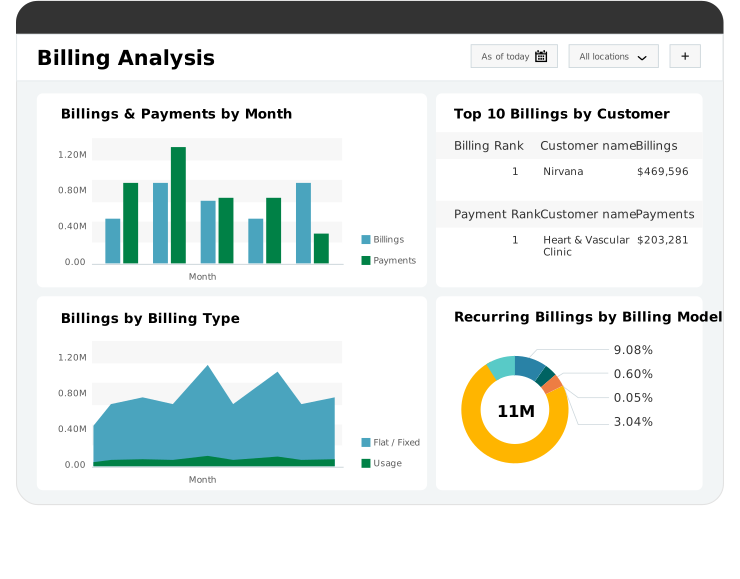
Automate complex subscription and usage billing, recurring revenue, and rev rec with 500+ scenarios.
Empower your team with automated workflows that integrate seamlessly with your tech stack.
Empower your team with streamlined accounting and automated financial processes designed to scale with your business.
International expansion made easy: Gain advanced financial insights and control with a robust system.
"Sage Intacct has given us the ability to better forecast the business and focus on a go-forward strategy, rather than 'here and now.' I couldn't have done that with NetSuite."
SaaS accounting and billing platforms are designed to handle the unique financial management needs of companies that offer services on a subscription basis. This type of software typically includes features for:
SaaS subscription management software is a tool specifically designed to help businesses that offer subscription-based services. It tackles various tasks throughout the customer lifecycle, automating and streamlining processes to save time and resources. Here's a breakdown of its key functions:
SaaS accounting and subscription management software can streamline processes, save time, and provide detailed reporting that will help your SaaS company raise funding to scale your business. With the right software for B2C and B2B SaaS subscription management, you will find:
By leveraging such software, your business can focus on growth and innovation while the system handles the complexities of financial transactions and customer management.
SaaS subscription management software takes the complexity out of handling recurring revenue for your subscription-based business. It empowers you to offer a variety of billing models that cater to different customer needs and your business goals. Here's a breakdown of the common billing models this software can handle:
Evergreen subscriptions: This is the bread and butter of subscription services. Customers are automatically charged at the end of their billing period (usually monthly or annually) unless they cancel. SaaS subscription management software automates recurring billing for evergreen subscriptions, ensuring a steady stream of predictable income.
Usage-based billing: Perfect for services where usage varies, like cloud storage or telecommunications. Customers are billed based on their actual usage of the service. The software tracks usage metrics (storage space used, minutes used) and generates bills accordingly. This allows for a more flexible and fair pricing structure.
Tiered subscriptions: Offer different feature sets at different price points. This caters to customers with varying needs and budgets. The software simplifies managing multiple tiers, allowing customers to easily upgrade or downgrade their plans.
Fixed-fee subscriptions: This is a straightforward model where customers pay a set price (monthly or annually) for access to all features. SaaS subscription management software makes it easy to set up and manage fixed-fee subscriptions.
Hybrid models: You can combine elements of different models to create a customized billing structure. For example, you could offer an evergreen base plan with additional features available on a usage-based pricing model. The software provides the flexibility to manage these hybrid configurations seamlessly.
Here's an example: Imagine you offer a design software subscription. You could have:
Yes, subscription and SaaS accounting can be automated. Automation in this context typically involves using specialized software that can handle recurring billing, payment processing, revenue recognition, and financial reporting.
When considering which SaaS billing platform to invest in, make sure the options on your shortlist can offer the following core capacities and features:
Most finance teams spend 80% of their time doing manual transaction support, and only 20% of their time on strategic planning. The best SaaS operational finance teams chose Sage Intacct to shift that to 80% strategic, and 20% transactional. We have engineered our platform to eliminate manual, tedious processes that burn through weeks of work each month, such as manual entry of orders out of Salesforce.com and exceptions to contract revenue recognition and billing. We then provide access to the necessary real-time SaaS metrics, financial dashboards, and tools to enable strategic analysis, forecasting, and scenario planning that allow CFOs to recommend new initiatives that grow revenue, reduce churn, improve efficiency of customer acquisition, direct product development that delights customers, adjusts pricing to maximize customer acquisition and profitability, and deliver the churn, cash-flow, CMRR, and other metrics with confidence to impress investors and secure new funding.
It empowers CFOs to recommend new initiatives that:
Order-entry-only suites don't allow you to manage SaaS revenue recognition, billing, or SaaS metrics. And subscription-billing-only solutions don't allow you to track expenses, see cash-flow, or forecast scenario planning for the company.
SaaS companies rely heavily on recurring revenue streams, which can sometimes be unpredictable due to factors such as customer churn, pricing changes, and market fluctuations. Often, SaaS business leaders might prioritize growth over short-term profitability, reinvesting revenue into sales and marketing efforts to acquire new customers and expand market share. However, potential acquirers or investors may prioritize profitability and cash flow generation. During the IPO process, potential buyers or investors will conduct thorough due diligence to assess the company's financial health, operational efficiency, customer base, intellectual property, and legal compliance. Your finance team must ensure that accurate and comprehensive financial records are readily available and that any potential risks are addressed proactively. Sage Intacct can help you effectively navigate the course of executing an IPO:
Explore eight SaaS pricing models with real-world examples, pros and cons, and expert guidance to help you choose the right strategy for your business.
Discover why SaaS reporting is vital for tracking recurring revenue, reducing churn, and driving growth. Learn key metrics and best practices today.
Discover key SaaS metrics like CARR, CAC, churn, and CLTV. Learn how these measurements help subscription businesses track growth and business health.
Explore this subscription billing guide, including best practice tips, key benefits, common challenges, and some of the different pricing models to consider.
Ensure the future success of your business with SaaS budgeting. Get valuable budgeting and planning tips to stay ahead in the competitive market.
Want to boost your business intelligence IQ with real-time SaaS metrics? Dive into the benefits of our SaaS Intelligence module for Sage Intacct.
Wondering how to build your FinOps tech stack for maximum impact? Get pro tips for CFOs from the Modern SaaS Finance Forum.
Sage Intacct was voted the #1 close management solution for SaaS CFOs. Read more on our blog, and find out why you should prioritize a smooth month-end close.
Ready to learn more about what Sage SaaS subscription management tool can do for your tech company? We are, too. Our product experts are here to guide you every step of the way.