Supply chain management: Definition, components, and technologies
Unlock supply chain excellence. Discover the key factors, best practices, and tech solutions to boost efficiency and delight your customers.
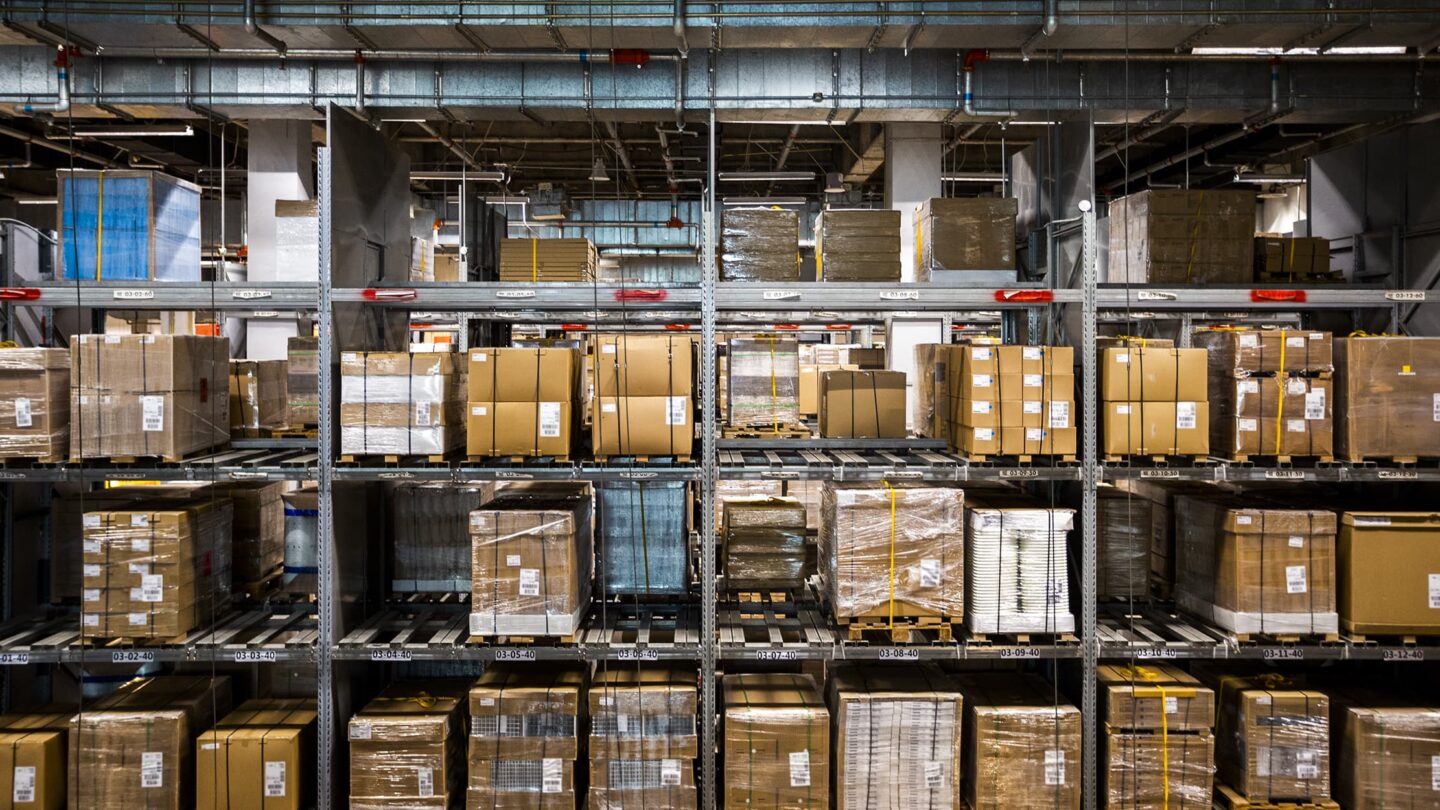

Supply chains are complex, dynamic networks that require seamless connectivity, real-time data visibility, and the ability to adapt quickly to disruptions. Businesses must prioritize collaboration, proactive decision-making, and digital transformation to build a resilient supply chain.
To scale up production, start by organizing your operations and learning the fundamentals of effective supply chain management. We’ll begin by defining supply chain management, then outline the key tasks, objectives, and components required for success.
Here’s what we’ll cover
Move beyond ERP with Sage X3
Take control of your entire business, from supply chain to financial with X3.
Incredibly customizable software for established manufacturers and distributors looking for greater efficiency, flexibility, and insight.

Supply chain management definition: Everything is interlinked
Supply chain management (SCM) encompasses a wide range of activities, including demand forecasting, procurement, supplier relationships, production, inventory control, warehousing, and logistics.
It’s about providing real-time visibility into the movement of materials and products, from suppliers to end customers. This enables organizations to anticipate disruptions, make data-driven decisions, and respond proactively to changing demands. Additionally, businesses must monitor industry trends to anticipate future needs and challenges.
Supply chain management is a critical function within wholesale distribution because its efficiency impacts the success of other integral parts of the business:
- Customer service: A connected supply chain enables real-time tracking and transparency, allowing customers to access updates at every stage of the process. This builds trust, reduces uncertainty, and improves overall customer experience.
- Operating costs: The supply chain should align with product demand to prevent overstocking and minimize inventory costs. It’s also where you manage supply costs like raw materials and transportation.
- Financial management: As you speed up the product flow to your customers, you speed up your cash flow into the business. Delivering products allows you to invoice sooner, improving cash flow. Visibility into your supply chain can highlight where you can reduce costs and wait times and increase profit margins.
The SCOR model: Evolving for a digital supply chain
The Supply Chain Operations Reference (SCOR) model has long been a standard framework for optimizing supply chain performance. Traditionally used to structure and measure supply chain activities, it must now also embrace connectivity, transparency, and resiliency to address the evolving challenges of today.
The digital evolution of SCOR
Modern supply chains demand real-time visibility, predictive insights, and adaptive decision-making. The SCOR framework is evolving to integrate emerging technologies such as AI and machine learning, blockchain for supply chain integrity, and real-time monitoring through the internet of things (IoT).
These innovations transform SCOR from a static process framework into a dynamic, data-driven ecosystem that enhances resilience, risk management, and efficiency.
Collaborative planning and cloud-based platforms
SCOR is no longer just about internal processes. It’s also about how businesses collaborate across the entire value chain. Cloud-based platforms are enabling real-time data sharing across suppliers, manufacturers, and distributors, helping businesses:
- Plan for and adjust to demand fluctuations instantly.
- Gain visibility into supplier constraints and shipping delays.
- Improve inventory management by leveraging real-time data.
Key benefits
By integrating these digital advancements, businesses using SCOR can:
- Increase supply chain resilience: Predict and mitigate risks with AI-driven insights.
- Enhance transparency: Leverage blockchain and real-time data for end-to-end visibility.
- Improve agility: Rapidly adjust to market changes with scenario planning and cloud-enabled collaboration.
SCOR consists of six components, each with specific processes that support efficient production and distribution:
Planning
Planning starts with nailing down the details of your operation strategy.
Decide where to locate your production facilities. This could be domestically or internationally.
- Decide whether you make the entire product yourself or purchase some components elsewhere. There are benefits and challenges with either, so this should be done strategically.
- Decide how you’ll produce and store your product. Will you make them in advance and store them to await order? Or will you make them once the customer orders? You could also have a portion of the final product made in advance and complete production upon order or offer order customization.
You can use any combination of these strategies and the method for performance measurement is established before planning begins.
Sourcing
The next phase is procuring your raw materials and any components you intend to outsource. Procure materials at the optimal price, time, and quantity.
It’s important that all suppliers are thoroughly vetted and all contracts are negotiated to get the best value without sacrificing quality. Delivery scheduling is critical, too.
Assessing supplier performance is a continuous requirement for optimal supply chain management, as well as scheduling payments and ensuring import/export requirements are met.
Location
Location is critical for successful supply chain management. A suitable location that is convenient for your resources and materials is ideal.
For example, a carbonated drink company located in an area with scarce water resources could threaten the viability of the business.
Making
This is where assembling, testing, and packing activities happen.
This stage also includes establishing rules for performance measurement, how you’ll store data, your production facilities, and regulatory compliance.
Delivery/Logistics
This component encompasses all the steps for processing customer orders, distributing them, and transporting them.
Warehousing and inventory, or paying a service provider to manage both, are also included in this stage.
This stage also includes managing trial periods, warranties, and invoicing after product delivery.
Returns
You’ll need a smooth and easy process for customers to return defective products.
This also covers handling “end of life” products when discontinuing production, sales, or support.
For defective products, this stage includes your company’s established rules for monitoring performance, costs, and inventory for the returned product.
This means:
- Identifying the product condition
- Authorizing returns
- Scheduling replacement product shipments
- Providing refunds
SCOR is not just about efficiency. It’s about creating an adaptable, intelligent, and interconnected supply chain that can withstand disruptions and thrive in a complex global economy.
The tech: connected, resilient, and transparent supply chains powered by Industry 4.0
New technology is changing the way businesses manage their supply chains.
Business management solutions allow managers to identify and act on time and cost saving opportunities throughout each stage.
Additionally, robust enterprise resource planning (ERP) solutions often include embedded SCM capabilities.
This technology makes it easier to plan, forecast, and manage inventory alongside financial information related to the supply chain.
Industry 4.0 refers to major innovations in technology that are coming into maturity at the same time, embedded by companies around the world, integrating the virtual and physical worlds to bring forth powerful new ways of working.
Examples of this technology include:
AI-assisted innovation
AI enhances forecasting, identifies potential supply chain disruptions before they occur, and optimizes logistics for greater responsiveness. AI-assisted tools are at work right across the wholesale distribution supply chain, enhancing efficiency, accuracy, and decision-making through:
- Demand Forecasting: AI analyzes historical sales data and market trends to predict future demand, helping businesses optimize inventory and reduce overstock or stockouts.
- Route Optimization: Machine learning algorithms calculate the most efficient delivery routes, reducing fuel costs and improving delivery times.
- Warehouse Automation: AI-powered robots and automated systems speed up order picking, packing, and inventory management, increasing efficiency.
- Supplier Risk Management: AI monitors global data sources to detect potential supply chain disruptions, allowing businesses to react quickly.
- Dynamic Pricing: AI adjusts pricing in real-time based on demand fluctuations, competitor pricing, and inventory levels.
This innovation boosts productivity, lowers costs, and increases customer satisfaction by ensuring faster, more reliable deliveries and better supply chain visibility.
The internet of things (IoT): Enabling real-time connectivity
IoT is the fusion of physical objects such as software, sensors, and electronic items with Internet and machine-enabled data collection and transfer.
It allows for real-time communication, making it possible to initiate physical systems without human intervention and giving rise to smart cities. Sensors track shipments, monitor environmental conditions, and enable immediate responses to delays or quality issues.
IoT offers you the opportunity to build digitized and connected supply chains — completely integrated ecosystems that are fully transparent to the contributing marketing, product development, manufacturing, and distribution departments.
Leveraging data and advanced analytics
With the Internet of Things comes a huge amount of data, and the way your business reads and analyzes that information is important.
In wholesale distribution, the availability of data on customer preferences and buying behavior can add new dimensions to the way you purchase and ship goods, offering better innovation, marketing, and decision-making.
Robotics and automation
Robots are already widely used in manufacturing, such as mechanical arms on assembly lines. Industry 4.0 could see the contribution of robots massively increasing.
Smart factories may use robots to manage manufacturing and delivery with minimal human involvement, thanks to integrated computing and communication systems.
Simulations, 3D printing, and augmented reality
Today, goods can be virtually modeled and tested, saving time, materials and costs.
Through 3D printing, we can see the creation of customized, complex, and lightweight designs at remarkable speeds, while augmented reality offers a future where employees can be trained on the job far more effectively than with paper or monitors.
When combined with cloud-based services and mobile apps, augmented reality and wearable technology provide workers with hands-free access to critical information.
Achieve unprecedented control and resilience in your distribution network
- Unify your data into a single, integrated platform, providing real-time visibility across all operations.
- Foster seamless connectivity between suppliers, warehouses, and customers, ensuring efficient information flow.
- Strengthen your supply chain resilience by proactively identifying and mitigating potential disruptions.
- Drive transparent operations through actionable insights and data-driven decision-making.
Ready to transform your supply chain into a connected, resilient, and data-driven powerhouse? Discover how Sage empowers distributors to streamline operations, boost efficiency, and adapt to any challenge, all while integrating financials inventory and advanced analytics in one customizable platform. Take the next step toward supply chain excellence.
Learn how Sage X3 helps distributors streamline operations, improve inventory accuracy, and stay agile in a changing market.
Editor’s note: This article was originally published October 2019. It was reviewed and updated in October 2025 for relevance.