
What is ABC analysis in inventory management? Definition, steps and examples
Master ABC analysis inventory management. Learn to categorise stock, optimise resources and improve cash flow and profitability for South African businesses.
Every invoice paid means more revenue in your business. See how online invoicing software creates and tracks invoices in real-time, automates reminders and recurring invoices, and helps process invoices faster.
Over 3 million global businesses of all types, from sole traders to small and medium companies, trust our flexible, dynamic, and easy-to-use invoicing software.
Whether you’re a sole trader, a small business, or a medium-sized company on the rise, our invoicing software adapts to your needs. Upgrade or cancel anytime—no long-term contracts or commitments.
Discover our flexible and intuitive invoicing software for small business and medium-sized companies with growth ambitions. There are no long-term contracts, so you can easily upgrade or cancel as your business needs evolve.
Cloud accounting for freelancers, sole traders, and small businesses:
What previously took five minutes per invoice is probably now a minute per invoice, which, when you’ve rolled out over 100 invoices a month, is quite a saving.
E-invoicing, or electronic invoicing, is the process of creating, sending, and receiving invoices in a digital format. Unlike traditional paper or PDF invoices, e-invoices are structured for seamless integration between systems, allowing businesses to automate billing and payment processes.
Traditional invoicing typically relies on a slow, manual process, which includes filling in billing details, printing paper copies, and physically sending them to customers. With e-invoicing, businesses can reduce admin tasks, improve accuracy, and track payments more efficiently. Customers receive invoices electronically, making it easier for them to pay on time. Our e-invoicing software integrates with partner tools within the Sage Network and trusted payment providers, simplifying the entire process.
Sole traders often rely on Excel due to availability and budget constraints. Excel might be useful if you only occasionally need to generate and send invoices. As your business grows, maintaining invoices in Excel formats can be daunting. Modern small businesses, medium companies and sole traders typically switch over to invoicing software to automate invoicing processes and manage payments easily.
If you have been using Excel templates or spreadsheets to create and keep track of your invoices, you can easily import your data to Sage. With a variety of customisable, professional yet simple templates, you'll never have to rely on Excel again.
Manually creating invoices with tools like Word or Excel can be time-consuming and makes it hard to manage your cash flow. Business invoicing software streamlines the process, saving you time and helping you stay on top of your billing. By implementing a solution with e-invoicing features, you can:
Online invoicing systems help you focus on what matters most—running your business—while keeping your payments organised and efficient.
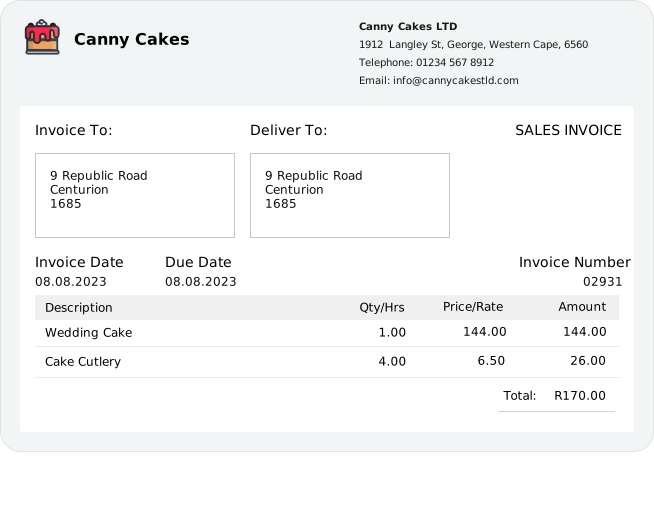
To be legally valid, an invoice must include an offer made by one party and accepted by another. While requirements vary by region, invoices typically need:
For more details on what to include, have a look at our invoice cheat sheet. Using tools like invoice software makes it easier to include all the necessary elements, ensuring compliance and professionalism.
Absolutely. You can easily import existing invoices and historical data when switching to Sage from other systems like Xero or Quickbooks. Import effortlessly with simple CSV templates or with 1-1 support whenever you need it.
Choosing the best invoice software means finding a solution that fits your business needs and budget while offering simplicity, scalability, and seamless integration.
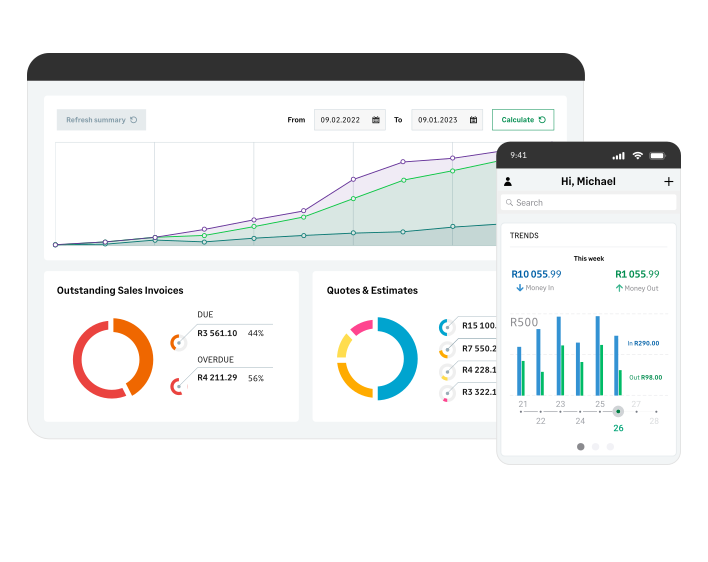
Look for an online invoice system that prioritises security, compliance, and quality customer support. Read user reviews and industry recommendations to identify trusted providers. Go beyond just traditional invoicing features. Make sure the invoicing software include comprehensive financial dashboards with key metrics and offer built-in financial reporting and analytics, so you can stay on top of how your business performs.
Read our blog for expert advice on invoicing, practical tips, and valuable insights to help your business thrive. Uncover smarter ways to manage your invoices and unlock new opportunities for success.
Master ABC analysis inventory management. Learn to categorise stock, optimise resources and improve cash flow and profitability for South African businesses.
Master accounts payable reconciliation with our comprehensive guide. Learn the AP reconciliation process, best practices, and how to streamline vendor payments.
Accrued expenses vs accounts payable are both business debts, but managed differently. Learn how each affects your financial reporting and cash flow.
Learn about accrual accounting, including the benefits of this approach and why it may be the best accounting method for your South African business today.
South African small businesses face tighter SARS scrutiny, new digital VAT rules. Learn what’s changing and how to prepare with confidence.
Learn the best strategy for onboarding new employees and fostering engagement. Incorporate new staff smoothly with our onboarding guide.
The accounts receivable turnover ratio formula helps indicate your company's financial health. Learn how to calculate it and interpret results with examples.
Are you part of your business's accounting team? Understanding notes payable vs accounts payable is key to effectively managing what your business owes.
Want to learn more about our business invoicing software? We'd be happy to answer any questions you have and help you decide which solution best suits your needs.